
Retinoblastoma
Retinoblastoma is a malignant tumor of the eye that originates from the retina. It can affect one or both eyes in children, and is typically diagnosed in those 5 years old or younger.
This rare cancer of the eye is caused by a gene abnormality in chromosomes that contain genetic code that control cell growth and development. Most cases of retinoblastoma appear without warning or family precedent. Around 40 percent of children with retinoblastoma have an inherited form of the tumor, even if it has not presented in any other member of the family. Ten percent have a family member with the disease.
Retinoblastoma is detected using a CT scan and/or eye ultrasound. Other tests, such as an MRI or blood work, may be administered as well. An oncologist (doctor who specializes in cancer treatment) is often included in diagnosis and treatment.
Retinoblastoma is one of the most curable of childhood cancers, with 95 percent surviving. Prognosis depends on size and location of the tumor or tumors.
Treatment options include:
- Laser therapy: laser light is used to destroy the tumor.
- Cryotherapy: freezing treatment is used to destroy the tumor.
- Chemotherapy: drug treatment given via the bloodstream is used to kill the cancer cells; it is sometimes used in conjunction with laser therapy.
- Radiotherapy: high energy radiation is used to destroy cancer cells.
- Enucleation: removal of the eye.
Source: American Association for Pediatric Ophthalmology and Strabismus
Children’s Eye Care provides this information for general educational purposes only. It should not be construed as personal medical advice. Information published on this website is not intended to replace, supplant, or augment a consultation with an eye care professional. Children’s Eye Care disclaims any and all liability for injury or other damages that could result from use of the information obtained from this site.






RELATED POSTS
What’s new with pediatric glaucoma

Pardon Our Dust — Our West Bloomfield Clinic is Under Construction!
👉 What You Need to Know During Your Visit We’re excited to share that our office is undergoing renovations to create a better experience for our patients and families. Temporary Changes: Part of the waiting room is closed with secure construction plastic barriers, and space is limited. Noise Considerations: Most loud construction work is paused during clinic hours. Dilation Waits:
Mar. 09, 2025
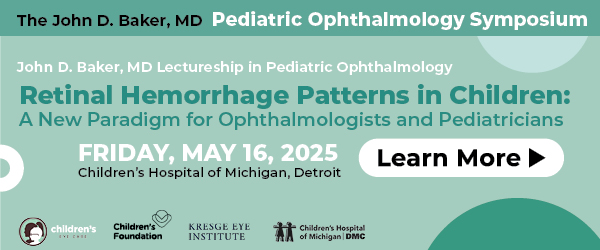
John D. Baker, MD Pediatric Ophthalmology Symposium 2025 | Baker Day Detroit
The John D. Baker, MD Pediatric Ophthalmology Symposium (Baker Day) Date: Friday, May 16, 2025. Lecture: 8:00 – 9:30 am Case Presentations: 10:00 am – 4:00 pm Location: Children’s Hospital of Michigan, 3901 Beaubien Blvd, Detroit, MI For nearly four decades, the John D. Baker, MD Pediatric Ophthalmology Symposium, affectionately known as “Baker Day,” has brought together pediatric ophthalmologists, orthoptists,
Feb. 04, 2025
Dr. Rao Named Teacher of the Year
Dr. Rajesh Rao, pediatric ophthalmologist at Children’s Eye Care in metro Detroit and Chief of Pediatric Ophthalmology at Beaumont Eye Institute, was named Teacher of the Year by the Beaumont Eye Institute’s ophthalmology residents. Dr. Rao has been is also an attending at Children’s Hospital of Michigan, an Associate Professor of Ophthalmology at Wayne State University School of Medicine and Oakland University
May. 26, 2016

Optical needs, in metro Detroit, during the COVID-19 Pandemic
April 14, 2020 Our opticals are closed, and we are not allowing our opticians to have face-to-face time with any patients. You can visit our Optical page for FAQ. Also, Barb and Kevin will be working remotely a couple of hours once or twice weekly. You can call our offices to leave a message for them or email us at info@cecmich.com with
Apr. 14, 2020
view all articles