Does your child seem to see better with one eye than the other?
Amblyopia, often called “lazy eye,” happens when vision does not develop normally in one or both eyes during childhood. It may be caused by an eye turn, unequal glasses prescriptions, or something blocking clear vision. Because children often don’t realize one eye sees poorly, amblyopia can be difficult for parents to notice. Early diagnosis and treatment by a pediatric ophthalmologist can help your child develop their best possible vision.
Crossed eyes (strabismus)
Do your child's eyes cross, wander, or seem to point in different directions?
Strabismus, commonly called crossed eyes, occurs when the eyes are not properly aligned. One eye may turn inward, outward, upward, or downward, and the eye turn may be constant or only happen sometimes. Strabismus often begins in infancy or childhood and can affect vision development, depth perception, or lead to amblyopia (lazy eye). Treatment depends on the type and cause of the eye turn and may include glasses, patching, or eye muscle surgery. A pediatric ophthalmologist can determine the best treatment for your child.
Blurry Vision / Failed Vision Screening
Is your child having trouble seeing clearly or did they fail a vision screening?
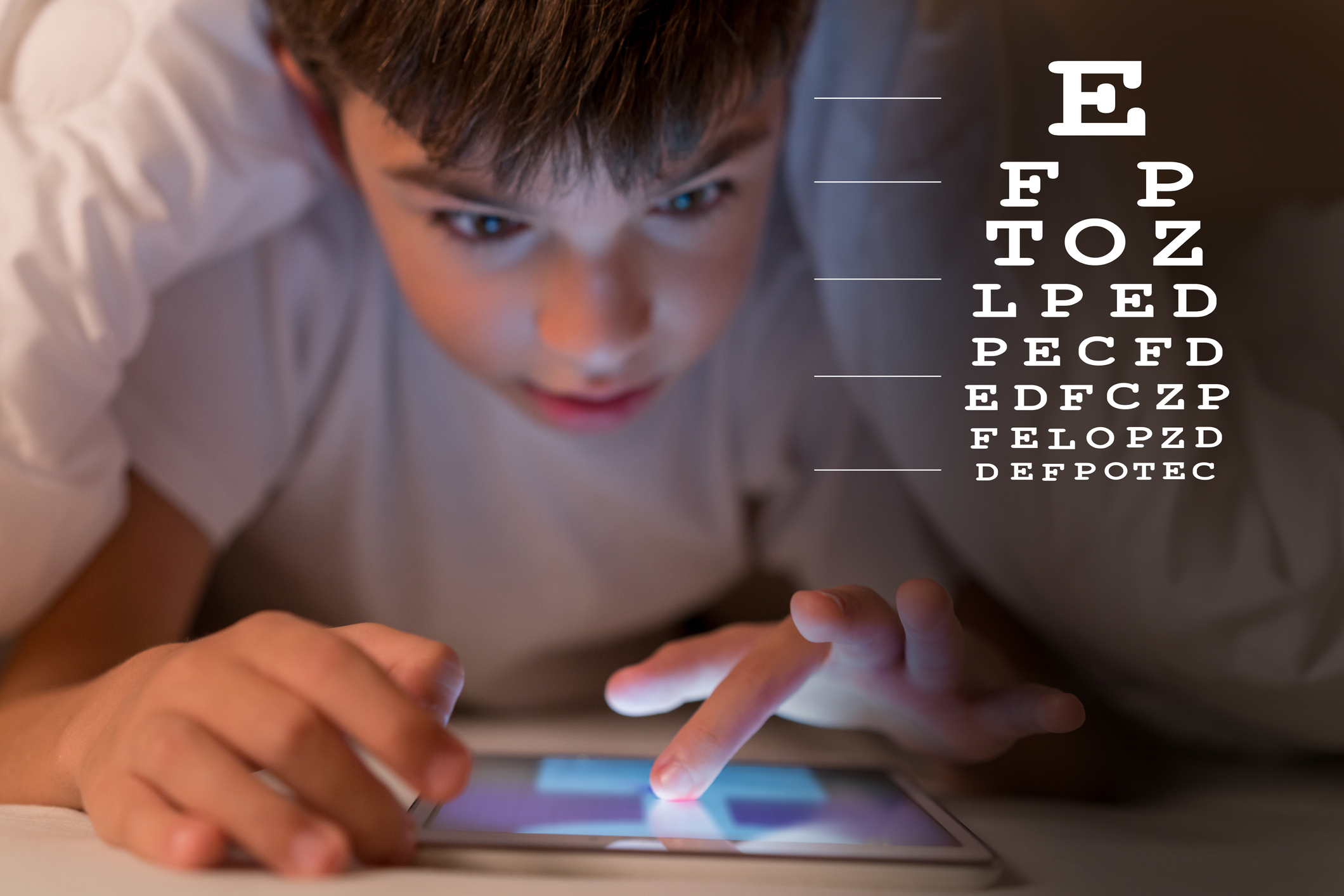
Blurry vision, frequent squinting, sitting close to screens, or a failed school or pediatrician vision screening may be signs of a childhood vision problem. Common causes include nearsightedness (myopia), farsightedness (hyperopia), astigmatism, and amblyopia (lazy eye). A pediatric ophthalmologist can perform a complete eye exam to determine the cause and whether glasses or other treatment is needed.
Does your baby or child have an eye that waters or tears frequently?
Persistent watery or tearing eyes are common in babies and young children and are often caused by a blocked tear duct. You may also notice tears running down the cheek, crusting on the eyelashes, or mucus-like discharge from the eye. Most blocked tear ducts improve as a baby grows, but some require treatment. A pediatric ophthalmologist can determine whether your child's watery eye is caused by a blocked tear duct and whether treatment is needed.
Does your child have a red, irritated, or uncomfortable eye?
Red eyes in children can have many causes, including conjunctivitis (pink eye), allergies, infection, irritation, or inflammation inside the eye called uveitis. While many causes of a red eye are minor, persistent redness—especially with eye pain, light sensitivity, or changes in vision—should be evaluated. A pediatric ophthalmologist can identify the cause and recommend appropriate treatment.
Have you noticed a white or cloudy appearance in your child's pupil or a white reflection in a photograph?
A white pupil, sometimes called leukocoria, should be evaluated promptly. In babies and children, a white or cloudy pupil can be associated with congenital or juvenile cataracts, retinal conditions, retinoblastoma, or other serious eye diseases. Our pediatric ophthalmologists have extensive experience diagnosing and treating complex childhood eye conditions, including pediatric cataracts.
Large, Cloudy or Light-Sensitive Eyes
Does your baby or child have unusually large or cloudy eyes or seem very sensitive to light?
Large eyes, cloudiness of the cornea, excessive tearing, and sensitivity to light can be signs of pediatric glaucoma, including congenital glaucoma that develops during infancy. Because glaucoma can damage a child's developing vision, early diagnosis and treatment are important. Our pediatric ophthalmologists specialize in evaluating and treating congenital and juvenile glaucoma and other complex childhood eye diseases.
Does one of your child's eyelids appear lower or droop more than the other?
A droopy eyelid, called ptosis, may be present at birth or develop later in childhood. Depending on its severity, ptosis can block vision or interfere with normal vision development, sometimes leading to amblyopia (lazy eye). A pediatric ophthalmologist can evaluate your child's eyelid position and vision and determine whether observation or treatment is appropriate.
Do your baby's or child's eyes shake, wiggle, or move back and forth?
Repetitive or uncontrolled eye movements may be a condition called nystagmus. Nystagmus can begin in infancy or childhood and may occur on its own or be associated with albinism, retinal or optic nerve conditions, cataracts, neurologic conditions, or other causes of reduced vision. A pediatric ophthalmologist can evaluate your child's eye movements and vision and determine whether additional testing or treatment is needed.
Does your child complain that their eye hurts or feels painful?
Children may use “eye pain” to describe different sensations. Tired, achy, or strained eyes—especially after reading, schoolwork, or screen use—are common and usually not an eye emergency. Pain or tenderness of the eyelid, particularly with a bump or swelling, may be related to a stye or chalazion rather than pain inside the eye. Significant or persistent eye pain, especially with redness, light sensitivity, injury, or changes in vision, should be evaluated promptly by a pediatric ophthalmologist.