What is a Third Nerve Palsy?
The third cranial nerve controls the movement of four of the six eye muscles. These muscles move the eye inward, up and down, and they rotate the eye. The third cranial nerve also controls constriction of the pupil, the position of the upper eyelid, and the ability of the eye to focus. A complete third nerve palsy causes a completely closed eyelid and deviation of the eye outward and downward. The eye cannot move inward or up, and the pupil is typically enlarged and does not react normally to light. A partial third nerve palsy affects, to varying degrees, any of the functions controlled by the third cranial nerve.
What are the symptoms of Third Nerve Palsy?
People over 10 years of age with third nerve palsy usually have double vision (diplopia) due to misalignment of the eyes. If a droopy eyelid (ptosis) covers the pupil, diplopia may not be noticeable. Ptosis of the eyelid or an enlarged pupil may be the first sign of a third nerve palsy. Young children usually do not complain of double vision.
What causes Third Nerve Palsy?
A third nerve palsy may be present at birth (congenital), and the exact cause may not be clear. Acquired third nerve palsy can be associated with head injury, infection, migraine, brain tumor, aneurysm, diabetes or high blood pressure.
What problems develop in children with Third Nerve Palsy?
Children may develop amblyopia in the involved eye. Amblyopia can often be treated by patching the unaffected eye. Patching may be necessary for several years, sometimes until age 12 years. Children with severe third nerve palsy often do not have binocular vision (simultaneous perception with both eyes), and stereopsis (three dimensional vision) is often absent. An abnormal head posture may allow binocular vision. A partial palsy can be associated with the development of binocular vision.
What can be done to correct Third Nerve Palsy?
Unfortunately, there is no treatment to re-establish function of the weak nerve if it is a congenital case. An acquired third nerve palsy may resolve, depending on the cause. Relief of pressure on the third nerve from a tumor or blood vessel (aneurysm) with surgery may improve the third nerve palsy.
The ophthalmologist will usually wait at least 6 months after onset for possible spontaneous improvement. During this observation period, patching one eye can alleviate double vision. Prism spectacles may relieve diplopia for some patients. If the palsy is present after 6 months, eye muscle surgery can be performed to realign the eyes so that the eyes are straight when the patient is looking straight ahead, and eyelid surgery can be done to help the ptosis in certain cases. The more severe the third nerve palsy, the more difficult it is to re-establish eye movements and single vision when the patient is attempting to use both eyes together. Residual diplopia can be quite bothersome for some patients.
Source: American Association for Pediatric Ophthalmology and Strabismus and image courtesy of American Academy of Ophthalmology.
SCHEDULE AN APPOINTMENT






RELATED POSTS
What’s new with pediatric glaucoma
Stephen Burwell completes CEC’s Orthoptic Program
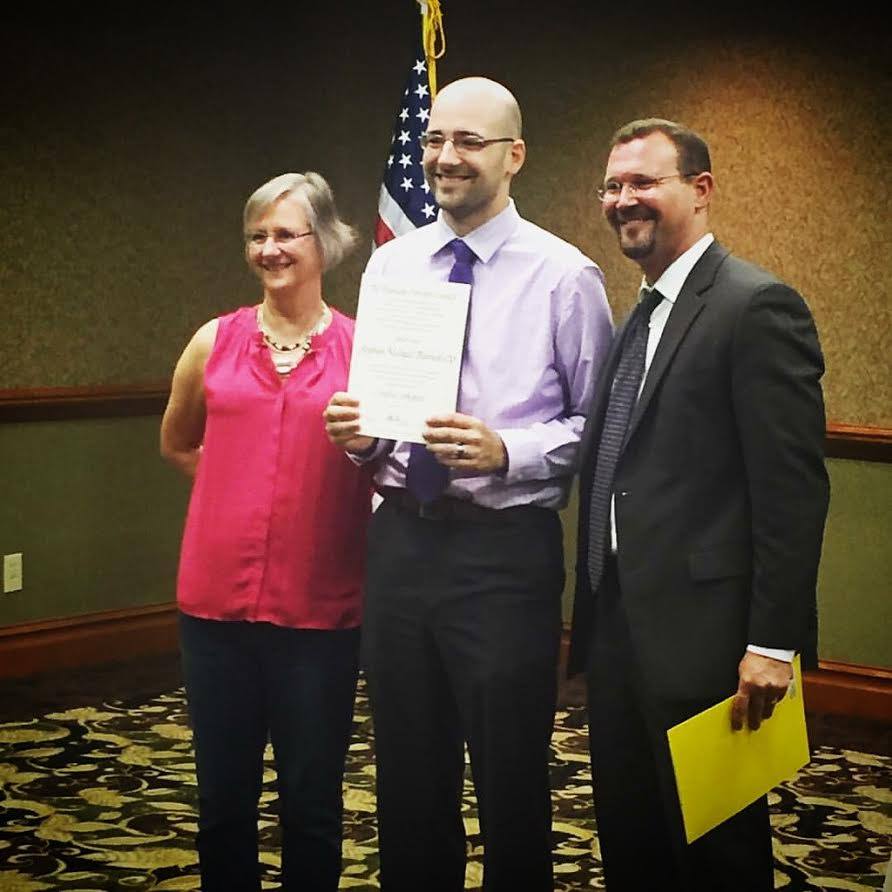
We are proud to announce that our orthoptic student has successful completed our two year orthoptic training program. Stephen Burwell, BS, COT has completed the intensive program as well as passed his written and oral boards with the American Orthoptic Council to become a board-certified orthoptist. He will then join Children’s Eye Care as a staff orthoptist. Congratulations to Stephen
Sep. 17, 2016

Pardon Our Dust — Our West Bloomfield Clinic is Under Construction!
👉 What You Need to Know During Your Visit We’re excited to share that our office is undergoing renovations to create a better experience for our patients and families. Temporary Changes: Part of the waiting room is closed with secure construction plastic barriers, and space is limited. Noise Considerations: Most loud construction work is paused during clinic hours. Dilation Waits:
Mar. 09, 2025
Viewing the Eclipse
Fake solar eclipse glasses are in the market. Make sure everyone you love knows how to be safe when watching the upcoming solar eclipse. Visit the American Astronomical Society’s website to learn more about the appropriate precautions to take when viewing the eclipse. https://eclipse.aas.org/eye-safety/iso-certification #SolarEclipseSafety #PediatricOphthalmology
Aug. 17, 2017
Staying Healthy, Helpful and Calm – Children’s Eye Care’s Health Policies
Please be Kind and Patient. Words matter. Behaviors matter. Our patients and our team matter. Even when stressed, kindness matters. Masks are Optional. While masks are optional for patients, guests, doctors and staff; please respect those that choose to wear one. All clinical staff and doctors will wear masks when examining premature babies. And, if any family/patient is masked when we
Feb. 24, 2023
view all articles