
Amblyopia, commonly known as “lazy eye,” is a condition where one or both eyes have reduced vision because the brain and the eyes are not working together properly. It happens when the brain begins to favor one eye - or fails to fully develop connections with either eye - causing poor visual development during early childhood.
If not identified and treated early, amblyopia can lead to long-term visual impairment that may not be correctable later in life, even with glasses or contact lenses.
What Causes Amblyopia?
Several conditions can interfere with normal visual development and lead to amblyopia:
-
Unequal focusing ability (Refractive Amblyopia)
Significant differences in nearsightedness, farsightedness, or astigmatism between the eyes may cause the brain to rely more on one eye, suppressing the other. In some cases, both eyes may be affected if the refractive error is high in both. -
Eye misalignment (Strabismic Amblyopia)
When the eyes are not properly aligned (a condition called strabismus), the brain may ignore the input from the misaligned eye to avoid seeing double, weakening the connection from that eye over time. -
Other visual blockages (Deprivation Amblyopia)
Conditions like cataracts, droopy eyelids (ptosis), or corneal scars can physically block vision in one or both eyes, leading to amblyopia if not treated early.
What Happens If It’s Not Treated?
If amblyopia is left untreated, it can lead to:
-
Permanent vision loss in one or both eyes
-
Difficulty with binocular (two-eyed) vision, which affects depth perception
-
Increased risk of visual disability if the stronger eye is ever injured later in life
Why Early Treatment Makes a Difference
Vision develops most rapidly between birth and age 9, with the most critical period typically occurring before age 7. During these early years, the brain is highly adaptable and more responsive to visual correction. This means that the earlier amblyopia is diagnosed and treated, the greater the chance of fully restoring strong, balanced vision in the weaker eye(s).
Starting treatment early, especially in toddlers and preschool-aged children, can lead to faster improvement and reduce the risk of permanent vision loss. In contrast, waiting too long can limit how much the weaker eye can recover, even with consistent patching.
At Children’s Eye Care, we encourage early screening and swift action because early treatment offers your child the best opportunity for lifelong healthy vision. With your support and our guidance, even young children can adapt well to patching and other therapies—with outcomes that last a lifetime.
Patience and Commitment Pay Off
Amblyopia treatment is not always easy — but it does work. Whether your child is using an eye patch, glasses, or other therapies, the long-term benefits of early and consistent intervention can be life-changing.
With time, patience, and the support of your care team at Children’s Eye Care, your child has every opportunity to build lasting visual strength, confidence, and independence.
Amblyopia is a condition where one or both eyes have reduced vision because the eye and the brain are not working together properly. It typically develops in early childhood and, if left untreated, can lead to permanent visual impairment.
Patching therapy works by covering the stronger eye with an adhesive or cloth patch. This encourages the brain to use the weaker eye, which over time helps strengthen the neural connection between the eye and the brain.
How Patching Therapy Is Done
At Children’s Eye Care, we create a personalized patching schedule based on your child’s age, the severity of the amblyopia, and how well they tolerate the patch. Here’s how the process typically works:
-
A soft, hypoallergenic patch is placed over the dominant eye
-
The patch is typically worn for a set number of hours per day
-
The duration and frequency are adjusted over time, depending on how your child responds to treatment
-
Follow-up visits are scheduled regularly to monitor progress
Our team offers guidance and tips to make the patching experience as smooth and stress-free as possible for both children and parents.
The amount of time your child will need to wear an eye patch can vary widely, as every child’s vision needs are unique. In general, the younger the child and the earlier the treatment begins, the shorter the duration of patching therapy needed to see improvement.
Some cases of amblyopia are more severe or more difficult to treat, and this can affect the length and intensity of patching therapy. At Children’s Eye Care, your child’s care is guided by a pediatric ophthalmologist, a medical doctor (MD) who specializes in children’s eye conditions. Our orthoptists, highly trained vision and eye muscle specialists who work closely with our ophthalmologists, play an essential role in evaluating visual progress and supporting therapy implementation.
Together, your pediatric ophthalmologist and orthoptist will help monitor your child’s response to treatment and provide recommendations for patching duration and follow-up care.
In most cases, your doctor will prescribe the patch to be worn either:
-
Full-time, or
-
For a specific number of hours per day
Once vision in the weaker ("lazy") eye improves and stabilizes, patching is typically tapered gradually to help prevent a relapse. Because vision can worsen after discontinuing the patch, regular follow-up exams are essential during and after treatment.
Encouraging your child to perform detailed or near-vision activities — like coloring, puzzles, reading, or using electronic devices — while wearing the patch can help stimulate the weaker eye. However, the most important “exercise” is simply wearing the patch consistently.
In some cases, despite consistent and appropriate patching, vision may not improve. If this occurs, your child’s pediatric ophthalmologist may advise stopping therapy and discussing alternative management strategies. Throughout the process, our orthoptists remain actively involved in supporting your child’s progress and helping families stay on track with the care plan.
Safety tip: If your child’s vision is significantly reduced in the weaker eye, it’s important to supervise them closely during patching. Avoid activities near roads, stairs, or water where limited depth perception could pose a safety risk.
Choosing the right eye patch is essential for successful amblyopia treatment. At Children’s Eye Care, we generally recommend adhesive skin patches as the most effective option, but we also understand that some children have different needs due to skin sensitivity or comfort preferences.
Here’s a guide to the most commonly used patches, along with pros, tips, and trusted sources.
Adhesive Patches (Recommended)
For the best results, we highly recommend using adhesive skin patches. These patches stick directly to the skin, ensuring the stronger eye is fully covered and preventing your child from peeking around the edges. They are worn under the glasses and should fit snugly and comfortably.
 Important Tip: Most adhesive patches come in Junior, Medium, and Regular sizes. We typically recommend Regular size patches for all children over 2 years old.
-
Ortopad USA – ortopadusa.com
-
See Worthy – worthybrands.com
-
Speckles Hide and See – specklesforkids.com
Cloth Patches
Cloth patches are soft, reusable, and worn over the eye or attached to glasses. While not usually recommended as a first-line option - because children can often peek around them - they may be helpful in cases where skin sensitivity makes adhesive patches difficult to tolerate.
-
Patch Pals – patchpals.com
Note: Cloth patches with elastic straps may allow for peeking and are best used only for children who do not wear glasses or when other options are not tolerated.
Where to Buy Patches
- Available at Our Office: We offer these trusted adhesive patch brands so your child to begin therapy immediately with a patch that fits correctly.
- Manufacturer's Website, Amazon or other online companies
DIY / Homemade Patches
For families who prefer to make their own patch or need a temporary solution, here are two homemade patch designs depending on whether your child wears glasses or not:
Without Glasses (Fabric Patch)
-
Cut an oval from dark, non-translucent fabric (e.g., washed denim)
-
Attach 3 one-inch strips of hypoallergenic tape around the edge
-
Trim excess tape, and cut small slits on one side for a snug fit around the nose
With Glasses (Construction Paper Patch)
-
Cut a 3” x 1.5” rectangle of dark construction paper
-
Round two corners, cut a center slit on the other end
-
Overlap the “tails” of the slit to create a curved shape and staple
-
Add double-sided tape inside and attach to glasses over the lens
-
Ensure no peeking by adjusting trim as needed
Choosing the Best Eye Patch for Your Child
Ultimately, the best eye patch is the one your child will wear consistently and comfortably. If you’re unsure which patch to try first or are experiencing challenges with patching compliance, our team at Children’s Eye Care is here to help guide you. We’ll help you select the right patch type and size and offer personalized tips to ensure your child’s success in treatment.
While adhesive eye patches are the most effective option for amblyopia treatment, a small number of children may develop mild skin irritation from daily use. At Children’s Eye Care, we understand how important it is to keep your child comfortable while maintaining consistent treatment. Below are tips to help prevent and manage skin irritation caused by patching.
Tips to Reduce or Prevent Skin Irritation
 Remove the patch gently.
Use a warm washcloth or sponge to moisten the patch before removal. The most common cause of irritation is the tugging of skin when the patch is peeled off too quickly.
 Avoid overnight wear.
Never leave the patch on overnight. Prolonged adhesion can worsen irritation and affect skin health.
 Rotate patch placement.
Slightly change the position of the patch each day so it adheres to different areas of skin. This gives irritated spots time to heal.
 Try different brands or sizes.
Some children react to certain adhesives more than others. Switching to a different brand or adjusting the size of the patch may improve comfort.
 Modify the patch (with care).
You can cut small holes or sections from the adhesive edges to reduce skin contact—just ensure the patch still fits securely and doesn’t allow peeking.
 “Pre-stick” to reduce stickiness.
Lightly stick the patch to your child’s clothing or your own arm before applying it to the face. This reduces the adhesive strength without compromising effectiveness.
 Use a barrier or ointment before removal.
Apply a small amount of A&D Original Ointment around the edges of the patch 15–20 minutes before removal. This can help the adhesive “melt” and come off easily.
 Apply a protective skin barrier.
Rub a thin layer of Milk of Magnesia (Mylanta or Maalox) onto the skin and let it dry before applying the patch. This can create a buffer between the skin and the adhesive.
 Create a protective layer.
Try placing hypoallergenic paper tape or gauze over the irritated area first, then apply the patch on top. This method gives the skin a break while continuing therapy.
 Soothe the skin at night.
Apply Aquaphor Healing Ointment or an over-the-counter ½% hydrocortisone cream (like Cortaid) to the irritated area before bed to promote healing.
Consider 3M Cavilon™ Barrier Film.
This no-sting barrier spray provides a protective film under the adhesive. Important: Do not spray this product directly on the face or near the eyes. Instead, apply a small amount to a clean fingertip or cotton swab and gently dab it onto the skin around the eye — avoiding the eyelid and ensuring it does not come into contact with the eye itself. Allow it to fully dry before placing the patch. This method provides targeted protection while keeping the area safe and comfortable for your child.
 Modify your patching schedule.
If approved by your pediatric ophthalmologist, alternate patching days (e.g., double the time one day, rest the next) to give the skin more time to recover.
When to Consider a Patch Alternative
If irritation persists despite these strategies, you may want to explore a cloth patch or other non-adhesive options. While not as effective in preventing peeking, they can be a helpful alternative for children with sensitive skin or persistent irritation.
Our team at Children’s Eye Care is here to help you troubleshoot any challenges you encounter with patching, including finding the most comfortable and effective solution for your child.
Getting children to wear an eye patch consistently can be one of the most challenging parts of amblyopia treatment. At Children’s Eye Care, we understand how frustrating and emotionally exhausting it can be when your child resists wearing the patch.
The good news? It does get easier. Starting is often the hardest part — but with routine, patience, creativity, and encouragement, many families find that children eventually adapt. Success relies heavily on your consistency, involvement, and commitment to working through the difficulties together.
Below are practical tips, strategies, and resources to help support you and your child when patching doesn’t seem to be going well.
the first effort fails. Persistence shows your child that patching is not optional and helps them accept it as part of their day.
Start Slowly
If your child is overwhelmed by the full prescribed patching time, speak to your doctor about gradually increasing the duration over several days or weeks. Reducing early frustration can help prevent long-term resistance.
Use Positive Reinforcement
Avoid power struggles. Praise your child’s efforts, no matter how small, and steer clear of punishment. Instead, use reward systems, stickers, or a “patching calendar” to make progress feel exciting.
Link Patching to Enjoyable Activities
Allow patching during screen time, favorite shows, video games, or special one-on-one activities with a parent or caregiver. This creates positive associations with the patch and offers distraction.
Get Creative and Make It Fun
-
Decorate patches with fabric paint, stickers, or clip-art
-
Play “King or Queen for a Day” with special privileges
-
Use a timer so the child knows exactly when patching ends — this makes the timer the “bad guy,” not the parent
-
Create patching games or let the child design their own patching reward chart
Try Patching at School or Daycare
Some children respond better when they patch during school hours, especially when surrounded by structured routines and supervised environments. Talk to your child’s teacher to create a supportive plan.
When More Structure Is Needed: Additional Strategies
In cases where patching compliance remains a serious issue, your doctor may suggest more structured techniques:
-
Use extra tape to reinforce the patch and prevent removal
-
Try soft hand restraints, such as:
-
Hand socks or mittens secured with tape
-
Inflatable water wings worn on the elbows
-
Specialized pediatric arm restraints like:
-
Snuggle Wraps™ Pedi-Wrap — snugglewraps.com
-
Medi-Kid Co. Solutions — medi-kid.com
-
-
Support at School
Help reduce stigma and increase cooperation by educating classmates and teachers:
-
Ask if your child can present patching at “Show and Tell”
-
Share books or resources about amblyopia
-
Ensure seating at the front of the class if vision is reduced
-
Provide enlarged handouts or books if needed
-
Ask the teacher to use whiteboards for better contrast over chalkboards
Alternative Forms of Patching
If adhesive patches continue to be too difficult, your doctor may suggest glasses-based occlusion using opaque materials over the lens of the stronger eye. However, these are often less effective because they allow for peeking. This option is best for mild cases of amblyopia or as a way to maintain vision gains once achieved through traditional patching.
Examples include:
-
Satin-finish Scotch® tape
-
Translucent contact paper
-
Bangerter occlusion foils (available in varying opacity levels; ask your doctor)
Books & Resources to Support Your Family
 Children’s Books
-
My New Eye Patch by Nancy Chernus-Mansfield – instituteforfamilies.org
-
Blueberry Eyes by Monica Driscoll Beatty – Amazon
-
Jennifer Jean, the Cross-Eyed Queen by Phyllis Reynolds Naylor – Amazon
 Parent & Educator Tools
-
Eye Patch Club (Prevent Blindness America): Tips, stickers, puzzles, support materials – www.preventblindness.org/eye-patch-club-0
-
Ortopad USA: Patching posters, games, DVDs – ortopadusa.com
 Truffles the Kitty: Truffles is a real-life cat who wears glasses to help kids feel confident about their own vision treatment. Her story has inspired children around the world and is especially helpful for young patients undergoing amblyopia therapy. Truffles Patching Program
A Final Word of Encouragement
Sometimes, even with your best efforts, patching just isn’t successful. It’s important to remember that you are not alone, and your dedication still matters. If your child’s vision does not improve, you can find reassurance in knowing that you did everything you could.
Our team at Children’s Eye Care is here to support you at every step - with resources, empathy, and a treatment plan tailored to your child’s needs. We believe in your child’s potential and we’re committed to helping you unlock it.
SCHEDULE AN APPOINTMENT
















RELATED POSTS
What’s new with pediatric glaucoma

Digital Devices, Virtual Learning, Blue Light Glasses and Your Child’s Eyes
Many of our patient’s parents have been asking us about concerns related to virtual learning, increased screen time and digital eye strain. Dr. Rao recently had a chance to talk to WDIV about these concerns. The links belows will provide you with our perspective and the national Academy of Ophthalmology’s statements on these topics. Blue Light Glasses There is no
Aug. 28, 2020

Pardon Our Dust — Our West Bloomfield Clinic is Under Construction!
👉 What You Need to Know During Your Visit We’re excited to share that our office is undergoing renovations to create a better experience for our patients and families. Temporary Changes: Part of the waiting room is closed with secure construction plastic barriers, and space is limited. Noise Considerations: Most loud construction work is paused during clinic hours. Dilation Waits:
Mar. 09, 2025
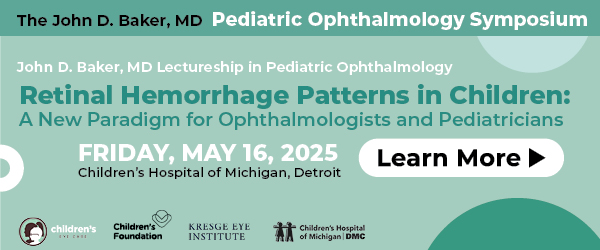
John D. Baker, MD Pediatric Ophthalmology Symposium 2025 | Baker Day Detroit
The John D. Baker, MD Pediatric Ophthalmology Symposium (Baker Day) Date: Friday, May 16, 2025. Lecture: 8:00 – 9:30 am Case Presentations: 10:00 am – 4:00 pm Location: Children’s Hospital of Michigan, 3901 Beaubien Blvd, Detroit, MI For nearly four decades, the John D. Baker, MD Pediatric Ophthalmology Symposium, affectionately known as “Baker Day,” has brought together pediatric ophthalmologists, orthoptists,
Feb. 04, 2025
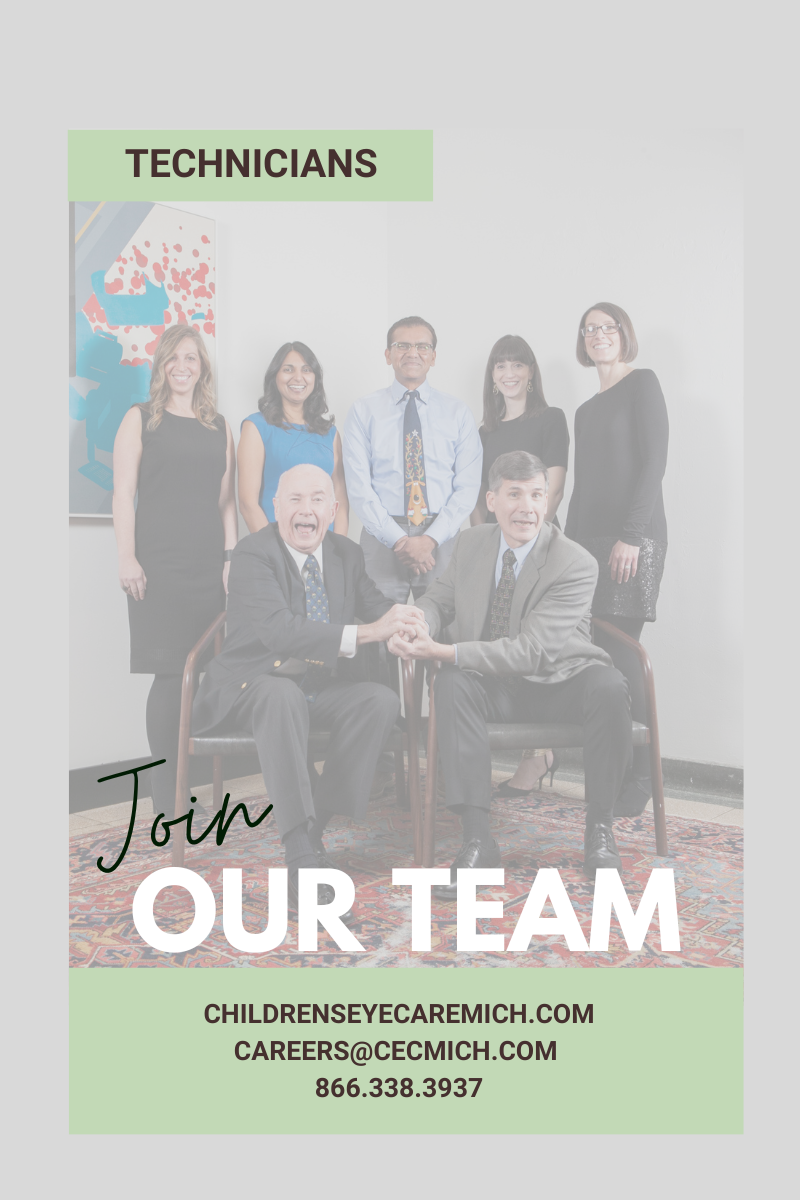
Hiring Pediatric Ophthalmic Technicians – Metro Detroit
Pediatric Ophthalmic Technician – Join a Leading Team in Pediatric Eye Care! Are you ready to launch or elevate your career in ophthalmic technology? We’re looking for passionate, detail-oriented, and motivated individuals to join our team. Why This Role? We are one of the nation’s premier pediatric ophthalmology practices, offering a unique blend of private practice, teaching and academic medicine. We are seeking ophthalmic technicians.
Apr. 12, 2025
view all articles